MK Manufacturing: 90% Fewer Order Errors, 60% Faster Fulfilment
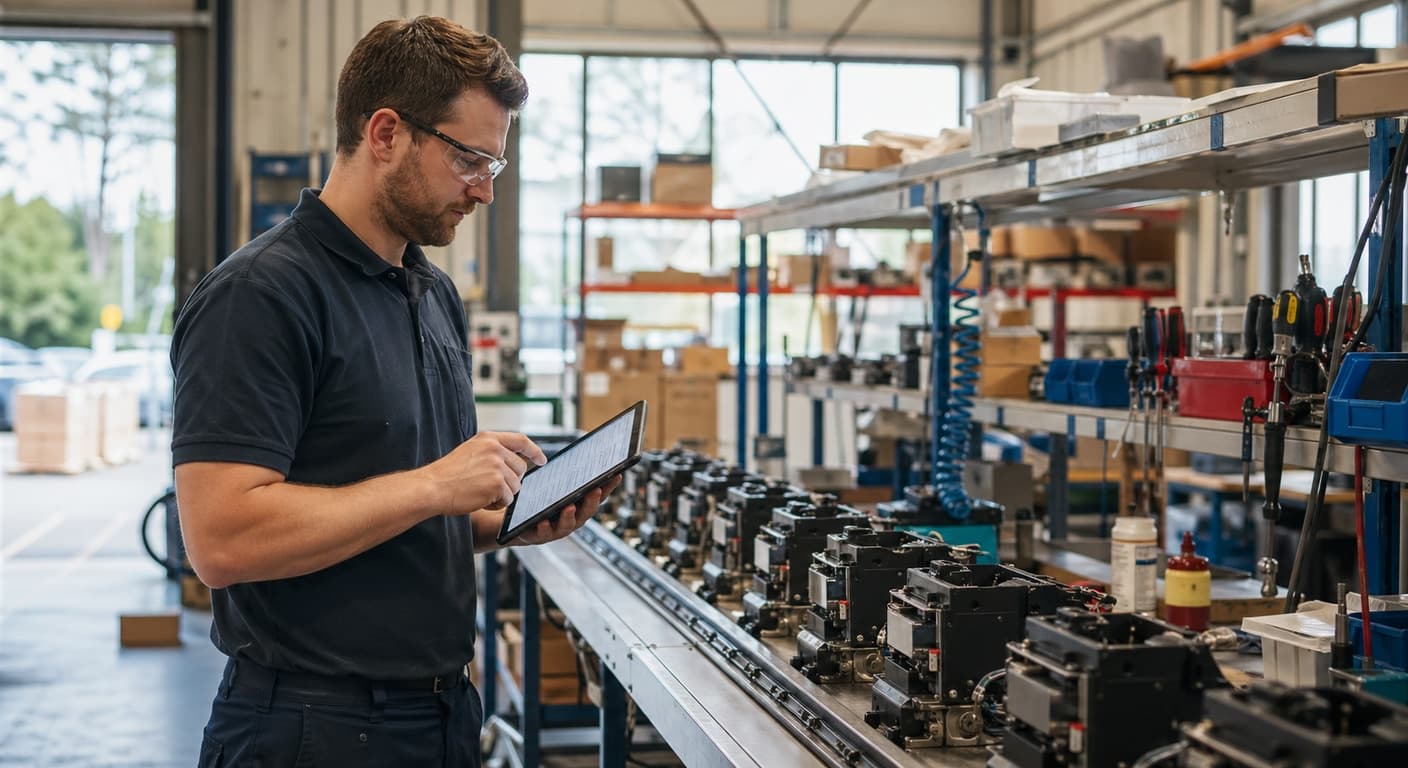
MK Manufacturing is a Colchester-based manufacturer. They came to us with a problem familiar to many small UK manufacturers: order processing was eating administrative hours, error rates were creeping up as volume grew, and customer-facing fulfilment times were slipping. We deployed an AI workflow automation that connected their order intake, inventory and dispatch systems. The result was a 90% reduction in order errors and a 60% improvement in fulfilment speed.
The Problem
Orders arrived in a mix of formats: emails, PDFs, occasional spreadsheets, sometimes verbal phone confirmations followed by a paper note. Each had to be manually transcribed into the production system, cross-checked against current stock, and queued for dispatch. The error rate from manual transcription was the single largest source of customer complaints, and the time spent on transcription was time not spent on production planning.
The team had considered hiring an additional admin person to absorb the workload. The cost was around £25,000 a year all-in for the role, and it would not have addressed the underlying error rate. They wanted a solution that scaled with order volume rather than headcount.
What We Built
A workflow automation that ingests orders from email and PDF sources, extracts the structured data using an AI document processing layer, validates it against the live inventory database, and pushes the validated order straight into the production queue. Exceptions (orders that fail validation, missing fields, stock shortages) are routed to a human reviewer with the relevant context attached.
The build took roughly six weeks from kick-off to live operation, including two weeks of parallel running where the automated workflow operated alongside the manual one so we could compare outputs and tune the validation rules.
The Results
Order errors dropped by 90% against the pre-automation baseline. Order fulfilment time improved by 60%. Both figures were verified against the production system over the first 60 days of live operation and have held steady since.
The admin time previously spent on order transcription was redeployed into production planning, which is the activity with higher operational value for the business. Headcount stayed flat.
Client Quote
“AI Consultants Essex revolutionized our factory floor. We faced bottlenecks in inventory tracking and order processing... they developed a custom AI solution that integrated with our existing systems, giving us real-time insights. We've reduced errors by 90% and increased our order fulfillment speed by 60%.”
Lessons for Other Essex Manufacturers
Manual order transcription is one of the highest-payback automation targets for small UK manufacturers. The work is structured, repetitive and high-volume, which is exactly where AI document processing performs reliably. Small manufacturers often assume this kind of automation is enterprise-scale; in practice, projects in the £3,000 to £8,000 range deliver working systems for typical SME order volumes.
For more on AI applications in Essex manufacturing, see AI for Essex Manufacturers. For the underlying service, see AI workflow automation.