How Essex Businesses Are Using AI Chatbots in 2026: Real Examples
AI chatbots can handle a large share of routine enquiries automatically. Real examples, costs from £99 per month, and what results to expect.
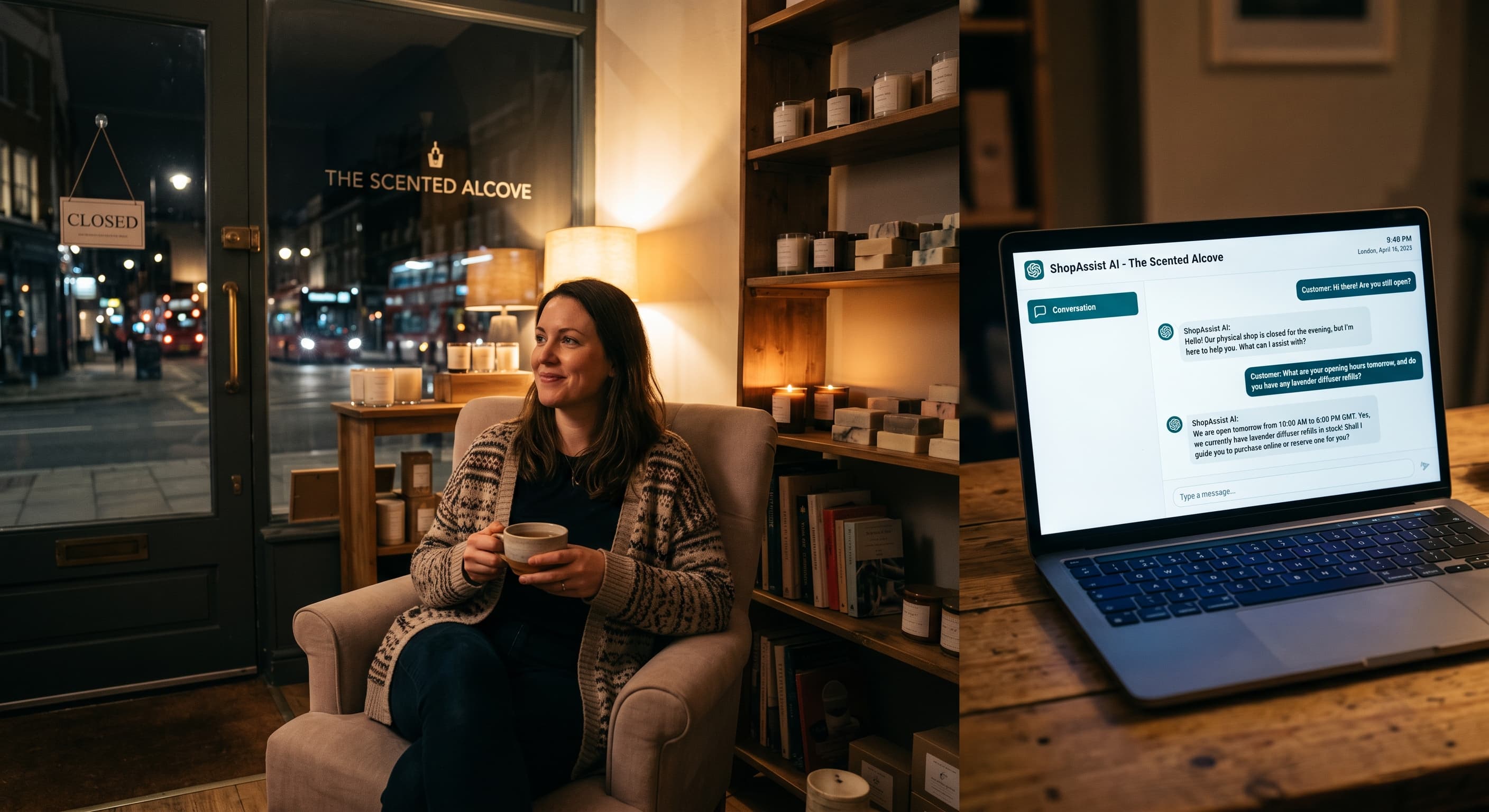
Most Essex small businesses tried chatbots five years ago and gave up. The early versions followed rigid scripts, misunderstood basic questions, and were quietly removed from websites within months. The technology in 2026 is fundamentally different. AI chatbots for Essex businesses are now powered by large language models, the same AI behind ChatGPT and Claude, which means they understand natural language, hold context across a conversation, and can handle queries they were never explicitly programmed for.
For small businesses in Essex, this shift matters because it makes chatbots genuinely useful rather than just a novelty on your website. Here is how businesses like yours are using them, what results they are getting, and what it actually costs.
What a 2026 Chatbot Can Do
A well-configured AI chatbot sits on your website, WhatsApp, or Facebook Messenger and handles customer interactions without human involvement. The key difference from older chatbots is that it does not need a script for every possible question. You feed it your business information, services, pricing, FAQs, and policies, and it answers questions in natural language based on that knowledge.
For an Essex plumbing company, the chatbot answers “Do you cover Basildon?” and “How much is a boiler service?” at 11pm on a Sunday. For a hair salon in Chelmsford, it books the next available appointment while the stylist is with a client. For a solicitor in Colchester, it captures new enquiry details and books an initial consultation slot, all before anyone in the office picks up the phone.
You deal with the conversations that need a human. The chatbot handles everything else.
Lead Capture: The Numbers
The most measurable impact for most small businesses is lead capture. A contact form on a website typically converts 2 to 5% of visitors into enquiries. A chatbot that proactively engages visitors and guides them through a conversation converts an average of 28% into qualified leads. For most small businesses, that difference alone justifies the cost.
The reason is simple: a chatbot responds instantly. Research consistently shows that responding to an enquiry within five minutes makes you 10 times more likely to qualify the lead compared to responding after 30 minutes. A chatbot responds in seconds, at any hour.
For businesses that receive a significant share of enquiries outside office hours, the impact is even larger. Studies show that 40 to 50% of website enquiries happen outside standard business hours. Without a chatbot, those visitors leave a form (maybe) or move on to a competitor. With one, they get an immediate conversation, their questions answered, and a booking or callback scheduled before they close the browser.
Customer Support: Handling the Volume
Customer service is the other major application. A well-configured chatbot handles a large share of routine enquiries without human involvement: opening hours, pricing, service areas, booking status, delivery updates, returns policies, and directions.
For a small business, this is not about replacing a customer service team; most Essex SMEs do not have one. It is about the business owner or office manager who currently spends two to three hours per day answering the same 10 questions by email, phone, and social media. A chatbot handles those questions instantly, consistently, and simultaneously, whether one person asks or 20 people ask at the same time.
The time saving is real. Small businesses using chatbots report reducing customer service workload by up to 68%, freeing roughly 15 to 17 hours per week. For a sole trader or small team, that is the equivalent of hiring a part-time administrator.
Industry Examples
Trades and home services.A heating engineer in Essex who cannot answer the phone while on a job loses leads. A WhatsApp chatbot captures the caller's name, postcode, issue description, and preferred callback time. The engineer reviews the enquiries between jobs and calls back the ones that match their service area. No more missed leads, no more playing phone tag.
Estate agents.Agents using AI chatbots report up to 40% higher lead capture rates. The chatbot asks about budget, area preference, property type, and timeline, then passes qualified leads to the agent with all details attached. For buyers browsing Rightmove in the evening and clicking through to the agent's site, the chatbot is the difference between a lead captured and a visitor lost.
Health and wellness. Dental practices, physiotherapists, and beauty salons use chatbots to handle appointment booking, cancellations, and rescheduling. The chatbot checks availability in real time and confirms the booking without staff involvement. For a practice handling 30 to 50 booking-related calls per day, the admin time saved is substantial.
Professional services. Accountants, solicitors, and consultants use chatbots to pre-qualify enquiries. The chatbot asks what the potential client needs help with, gathers basic details, and either books a consultation directly or routes the enquiry to the right person. This ensures the professional spends their consultation time on prospects who are a genuine fit.
E-commerce.Online retailers use chatbots for order tracking, return requests, and product recommendations. A customer asking “Where is my order?” gets an instant answer pulled from the shipping system, rather than sending an email and waiting 24 hours.
What It Costs
Chatbot costs for small businesses have dropped significantly as the technology has matured.
Entry-level chatbot platforms aimed at micro-businesses start from £99 to £129 per month. These typically include a website chatbot with AI-powered responses, basic integrations (calendar booking, email notifications), and support for a few hundred conversations per month.
Mid-tier platforms for growing businesses run £149 to £199 per month and add WhatsApp and Facebook Messenger channels, CRM integrations, and higher conversation volumes.
Custom-built chatbots, configured specifically for your business with deeper integrations (practice management software, ERP systems, bespoke booking flows), typically cost £1,500 to £7,000 as a one-off build, plus £200 to £500 per month for hosting and maintenance.
For context, a customer service employee costs £20,000 to £25,000 per year. A chatbot at £129 per month is £1,548 per year, roughly 93% cheaper, and it does not take holidays. The return on investment depends on your volume of enquiries, but for most small businesses, the chatbot pays for itself if it captures even two or three additional leads per month that would otherwise have been lost. For a more detailed estimate, try the free ROI calculator.
What Essex Businesses Have Achieved
Spoilt N Pampered Pooches, a mobile dog grooming business in Chelmsford, worked with AI Consultant Essex on a chatbot implementation. The chatbot handles booking enquiries and common questions about services and pricing, freeing up time that was previously spent answering repetitive calls and messages. The business now appears on page one of Google for its target searches, with the chatbot handling the conversion of that traffic into bookings.
MK Manufacturing in Colchester implemented AI automation for their order processing workflow, achieving a 90% reduction in errors and 60% faster fulfilment. While this was primarily a workflow automation project rather than a customer-facing chatbot, the underlying principle is the same: automate the repetitive processing, keep humans on the work that requires judgement.
Across our client base, businesses implementing chatbots typically see enquiry response times drop from hours to seconds, lead capture rates increase by 30 to 50%, and admin time spent on repetitive questions reduce by 10 to 15 hours per week.
Common Mistakes to Avoid
Trying to automate everything on day one. Start with the chatbot handling your 10 most common questions and routing everything else to a human. Expand as you see what customers actually ask.
Not updating the knowledge base. A chatbot is only as good as the information you give it. If your pricing changes, your services expand, or your hours shift, the chatbot needs to know. Treat it like a staff member who needs to be briefed.
No human fallback.Every chatbot should have a clear path to a human when the conversation goes beyond its capability. “I cannot help with that, but let me connect you to [name] who can” is a far better experience than a chatbot trying to bluff its way through a question it does not understand.
Ignoring the data. Chatbot platforms log every conversation. Review them regularly. You will discover questions you did not expect, objections you did not know customers had, and gaps in your website content that need filling.
Getting Started
AI Consultant Essex builds chatbots for businesses across the county, covering web, WhatsApp, and phone channels. A basic single-channel chatbot starts from £1,500 as a one-off build, with WhatsApp and multi-channel setups running from £2,000 to £7,000 depending on the integrations required. Monthly maintenance runs £200 to £500.
A free 20-minute consultation will tell you whether a chatbot is the right fit for your business, which channel (web, WhatsApp, or phone) will deliver the most value, and what results you should realistically expect based on your enquiry volume and industry.
Frequently Asked Questions
How much does a chatbot cost for a small business?
Entry-level chatbot platforms start from £99 to £129 per month. Custom-built chatbots configured for your specific business cost £1,500 to £7,000 as a one-off build, plus £200 to £500 per month for hosting and maintenance.
What percentage of enquiries can a chatbot handle?
A well-configured chatbot typically handles a large share, often the majority, of routine enquiries without human involvement. This includes opening hours, pricing, service areas, booking, and delivery status questions.
Do chatbots work on WhatsApp as well as websites?
Yes. Modern AI chatbots can operate across multiple channels including your website, WhatsApp, and Facebook Messenger. WhatsApp chatbots are particularly effective for trades, health, and service businesses where customers prefer messaging.
How long does it take to set up a business chatbot?
A basic website chatbot using a platform like Tidio or Intercom can be set up in a few days. A custom-built chatbot with integrations to your booking system or CRM typically takes two to three weeks.